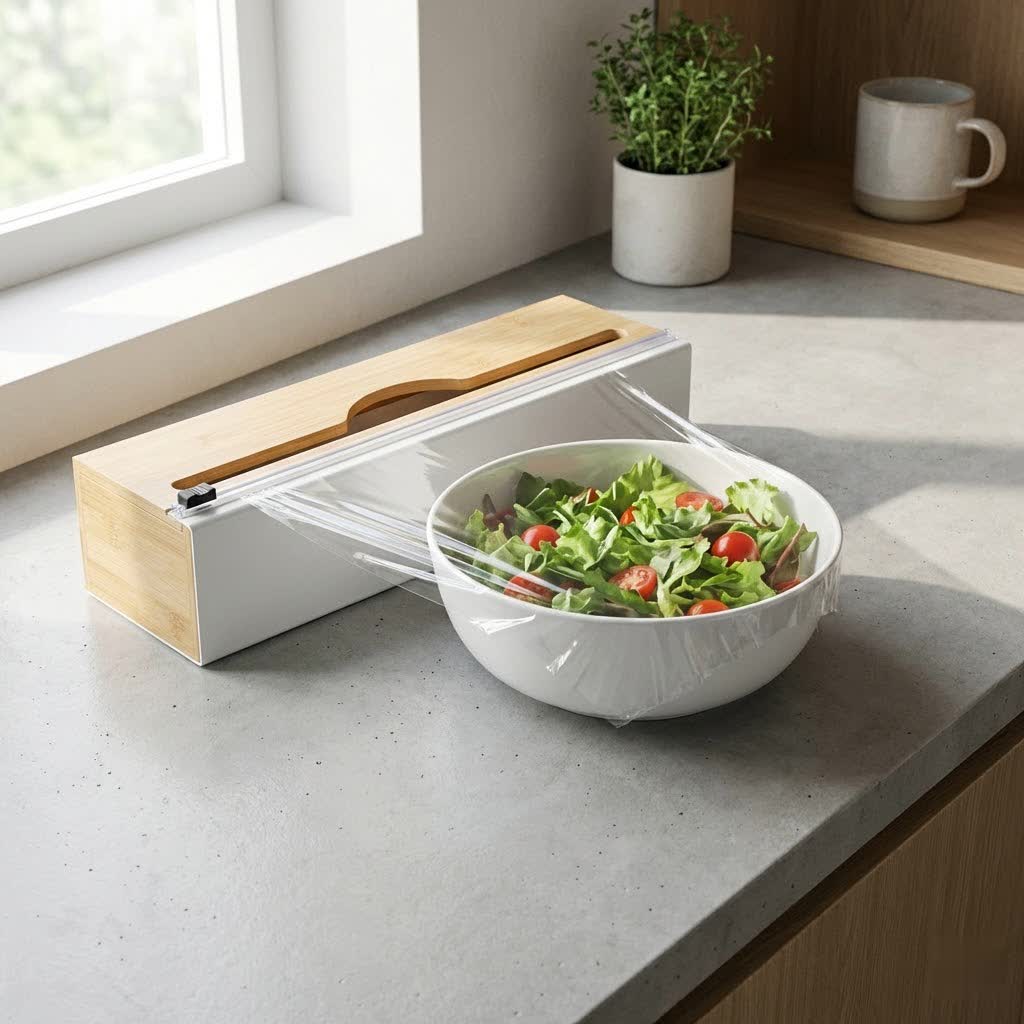
Navigating the world of kitchen essentials can be surprisingly complex, especially when it comes to something as seemingly simple as food wrap. For decades, regular cling wrap has been a staple, offering a basic solution for covering leftovers and preventing spills. However, the introduction of innovative products like Glad Press’n Seal has challenged the status quo, promising superior performance and versatility. This detailed comparison aims to dissect the functionalities, benefits, and drawbacks of both options, helping you make an informed decision for your kitchen and food preservation needs.
Understanding Regular Cling Wrap
|
Our Picks for the Best Food wrap in 2026
As an Amazon Associate I earn from qualifying purchases.
|
||
| Num | Product | Action |
|---|---|---|
| 1 | Kirkland Signature Food Wrap Premium |

|
| 2 | Glad Press'N Seal Food Plastic Wrap, 70 Square Foot Roll (Package May Vary) |
|
| 3 | Reynolds 912 Foodservice Clear Plastic Wrap Film, 15 inch Width, 2000 Feet |
|
| 4 | Reynolds Kitchens Quick Cut Plastic Wrap, 225 Square Feet |
|
| 5 | Glad Cling N Seal Plastic Wrap for Food, Airtight Seal, 300 Square Foot Roll (Pack of 4) |
|
| 6 | Plastic Food Wrap Thick Enough for daily use Stronger for Comercial Use Durable With Slide Cutter 12"wide 2000 Feet long Home and Commercial Use Food Service |
|
| 7 | Amazon Basics Plastic Food Wrap, BPA Free, Microwavable, 200 Sq Ft, Pack of 1 |
|
| 8 | Kirkland Signature Plastic Food Wrap - 6000 SQ. FT (2 Pack, 12" x 3000 SQ. FT Each) |
|
| 9 | Kirkland Signature Stretch Tite Plastic Food Wrap 11 7/8 Inch X 750 SQ. FT. Pack 2 |
|
| 10 | Amazon Basics Plastic Food Wrap, BPA Free, Microwave Safe with Tight Seal, 300 Sq Ft, Pack of 3, 100 Sq Ft Rolls |
|
Traditional or regular cling wrap, often simply called plastic wrap, is a thin, flexible plastic film designed to adhere to itself and various surfaces through static cling. Its primary function is to create a barrier that protects food from air exposure, helping to maintain freshness and prevent odors from spreading in the refrigerator. Historically, much of this wrap was made from polyvinyl chloride (PVC), which offered good cling but raised some environmental and health concerns. Today, many regular cling wraps are made from polyethylene (PE), particularly low-density polyethylene (LDPE), which is generally considered safer and more food-grade.
While offering a basic solution, regular cling wrap is often characterized by its struggles with consistent adhesion, a tendency to tear easily, and sometimes frustrating application. It’s a go-to for covering a bowl of salad or a plate of leftovers for a short period, providing a temporary shield against the elements. Its affordability and widespread availability make it a default choice for many households, despite its common frustrations.
Introducing Glad Press’n Seal
Glad Press’n Seal revolutionized the food wrap market with its unique “GripTech” technology. Unlike traditional cling wrap that relies on static, Press’n Seal features a textured surface coated with a proprietary sealing agent that forms a super-tight, airtight, and spill-proof seal when pressed against almost any surface. This innovative design allows it to stick not just to bowls and plates, but also to metal, wood, plastic, and even itself, creating custom-shaped bags or pouches.
BPA-free and safe for reheating in the microwave, Press’n Seal extends its utility far beyond simple food covering. It’s lauded for its ability to seal liquids without leaks, protect non-food items, and even act as a travel companion for toiletries. While generally a single-use product, its robust sealing capability often means one application can last longer and perform better than multiple layers of traditional wrap.
Head-to-Head: A Detailed Comparison
When placing Glad Press’n Seal side-by-side with regular cling wrap, several key performance indicators and features highlight their distinct differences.
Adhesion and Sealing Power
This is where Press’n Seal truly shines. Its GripTech technology creates a remarkably strong, airtight, and spill-proof seal. It effectively locks out air, significantly extending the freshness of food. Regular cling wrap, on the other hand, relies on static electricity, which often results in a weak, inconsistent seal. It’s prone to air gaps, making it less effective for long-term freshness or preventing spills.
Material Composition and Safety
Most modern regular cling wraps are made from polyethylene (PE), which is a common food-grade plastic. While older PVC wraps raised concerns about phthalates, PE wraps are generally considered safe for food contact. Glad Press’n Seal is made from a multi-layer polyethylene film, and importantly, it is certified BPA-free. Both are typically safe for reheating in the microwave, though direct contact with high-fat or high-sugar foods should be avoided to prevent potential melting or leaching.
Versatility and Multi-Surface Grip
Press’n Seal’s ability to adhere to a wide array of surfaces—including glass, plastic, paper, wood, and even itself—makes it incredibly versatile. You can create custom-sized bags, seal open containers of varying shapes, or even use it to protect surfaces during messy projects. Regular cling wrap is far more limited, primarily designed to stick to smooth, clean surfaces, often struggling with textured or uneven edges.
Ease of Use and Application
While both products aim for convenience, their user experience differs. Regular cling wrap can be frustrating; it often tears unevenly, tangles easily, and fights against itself. Applying it smoothly without wrinkles or air bubbles can be a challenge. Press’n Seal, conversely, typically tears cleanly from its box and, while requiring a firm press to activate its seal, is generally easier to handle and apply for a secure, custom fit.
Microwave Safety
Both types of wrap are generally considered safe for reheating food in the microwave, provided they don’t come into direct contact with the food itself, especially hot or fatty items, which can cause them to melt. Always ensure a small vent is created to allow steam to escape. Glad Press’n Seal specifically states it is microwave safe. Neither is suitable for conventional ovens, stovetops, or other high-heat cooking methods.
Cost-Effectiveness
Regular cling wrap is typically the more budget-friendly option upfront. Its lower per-foot cost makes it an attractive choice for basic, frequent use. Glad Press’n Seal, with its advanced technology and superior sealing, comes at a higher price point per roll. However, its effectiveness often means less waste from re-wrapping or food spoilage, which can offer long-term savings.
Environmental Considerations
Both regular cling wrap (PE) and Glad Press’n Seal are single-use plastic products, contributing to plastic waste. While some PE cling wraps are technically recyclable in facilities that accept plastic films, they are often rejected due to food contamination or lack of specialized recycling infrastructure. Glad Press’n Seal, being a multi-layered product with its adhesive coating, is generally not recyclable in standard municipal programs. Neither product is biodegradable or compostable.
Optimal Use Cases
Knowing the strengths of each wrap allows for smarter choices in the kitchen:
- Choose Glad Press’n Seal for:
- Long-term food preservation: When you need an airtight seal to keep food fresh for several days.
- Liquid or saucy foods: Its spill-proof seal is ideal for preventing leaks.
- Oddly shaped containers or items: Its ability to create custom pouches or adhere to irregular surfaces is unmatched.
- Travel and spill prevention: Great for sealing toiletries or packing snacks.
- Crafts and protection: Useful for covering paint trays, protecting surfaces, or organizing small items.
- Choose Regular Cling Wrap for:
- Short-term covering: Quick protection for a bowl of leftovers that will be consumed soon.
- Budget-conscious wrapping: When cost is the primary factor and a basic cover is sufficient.
- Simple bowl covers: When static cling is enough to loosely cover a container.
Choosing the Right Wrap for Your Needs: A Buying Guide
Selecting the best food wrap ultimately comes down to understanding your specific requirements and priorities.
- Assess Your Primary Need: Are you primarily looking for basic bowl covers, or do you need superior, airtight sealing for food preservation and spill prevention? This will be the biggest differentiator.
- Consider Food Types: If you frequently store liquids, highly aromatic foods, or items that need robust protection, the sealing power of Press’n Seal is a clear advantage. For dry goods or simple covers, regular cling wrap often suffices.
- Evaluate Versatility: If you appreciate a wrap that can do more than just cover food – like creating custom bags or protecting non-food items – Press’n Seal offers significantly greater flexibility.
- Factor in Cost: Regular cling wrap is the more economical choice per roll. However, consider the total value, including reduced food waste from better preservation, which might make Press’n Seal a more cost-effective choice in the long run.
- Think About Environmental Impact: Both are single-use plastics. If minimizing plastic waste is a top priority, consider reusable alternatives like silicone lids, beeswax wraps, or glass containers, rather than choosing between these two plastic options.
Table Comparison
| Feature | Glad Press’n Seal | Regular Cling Wrap |
|---|---|---|
| Sealing Mechanism | Proprietary GripTech adhesive | Static cling |
| Adhesion Strength | Excellent, airtight, spill-proof | Moderate to weak, prone to air gaps |
| Primary Materials | Multi-layer polyethylene film | Polyethylene (PE) |
| Microwave Safe | Yes, for reheating (vented) | Yes, for reheating (vented) |
| Versatility | High; sticks to many surfaces, self-sealing | Low; primarily sticks to smooth surfaces/itself |
| Ease of Dispensing | Generally clean tear, easy to handle | Can be frustrating; uneven tears, tangles |
| Typical Cost Range | Higher | Lower |
| Environmental Footprint | Single-use plastic, generally non-recyclable | Single-use plastic, often not effectively recyclable |
Conclusion
Both Glad Press’n Seal and regular cling wrap serve the fundamental purpose of food preservation, yet they achieve it with distinct approaches and varying degrees of effectiveness. Regular cling wrap remains a practical, budget-friendly option for basic, short-term covering needs, offering simplicity and widespread availability. However, for those demanding a superior, airtight, and spill-proof seal across multiple surfaces, Glad Press’n Seal stands out with its innovative technology and enhanced versatility. The ultimate choice hinges on your specific kitchen habits, the types of food you typically store, and your willingness to invest in a premium sealing solution. Which wrap will you choose to keep your food fresh and your kitchen organized?
Frequently Asked Questions
What is the main difference between Glad Press’n Seal and regular cling wrap?
The primary difference lies in their sealing mechanism and adhesion strength. Glad Press’n Seal utilizes a proprietary GripTech adhesive for a strong, airtight, and spill-proof seal on various surfaces, whereas regular cling wrap relies on static cling, often resulting in a weaker and less consistent seal primarily on smooth surfaces.
Can Glad Press’n Seal be used in the microwave?
Yes, Glad Press’n Seal is microwave safe for reheating purposes. It’s recommended to create a small vent to allow steam to escape and avoid direct contact between the wrap and high-fat or high-sugar foods, which can cause it to melt.
Is regular cling wrap made from safe materials?
Most modern regular cling wraps are made from polyethylene (PE), which is generally considered food-safe and BPA-free. Older versions made from PVC raised some concerns, but PE is now the predominant material for consumer cling wraps.
Is Glad Press’n Seal reusable?
Glad Press’n Seal is primarily designed for single-use applications. While it offers a robust and reliable seal, it is not intended for repeated washing and reuse like some other food storage solutions.
Which wrap is better for preventing leaks?
Glad Press’n Seal is significantly better for preventing leaks due to its strong, airtight, and spill-proof seal created by its GripTech technology. Regular cling wrap’s static cling is often insufficient to contain liquids reliably.